
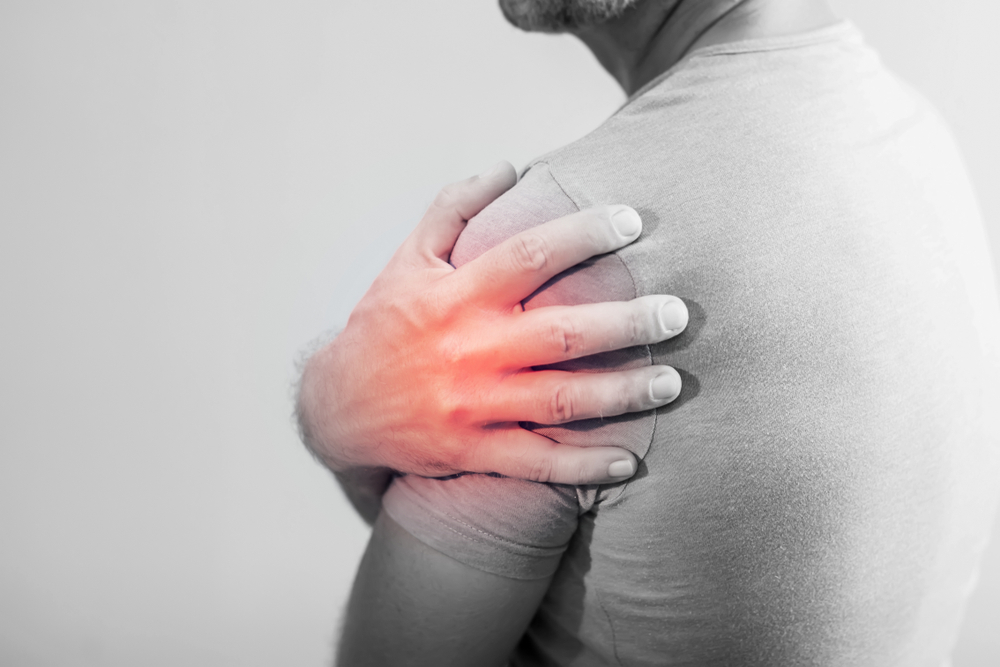
Rotator Cuff Pathology and Juventix Regenerative Medical Solutions
Overview of Shoulder Pain and Rotator Cuff Injuries
Shoulder pain is the third foremost musculoskeletal condition and it’s occurrence increases over age with a lifetime incidence of about 70% and is highest in the 40 to 59 year old individuals linked to a substantial socioeconomic burden. Rotator cuff injuries are the most frequent cause of shoulder pain accounting for over 70% of such complaints.
Anatomy of the Shoulder Joint
The shoulder joint (glenohumeral join) is a synovial ball and socket joint between the humeral head and the shallow glenoid fossa of the scapula. Stability of the joint is a function of the glenoid labrum and the tendons of the rotator cuff that blend with the capsule.
Rotator Cuff Structure
The rotator cuff of the shoulder joint is comprised of 4 tendons that stabilize the glenohumeral joint.
A. Supraspinatus (initiates abduction)
B. Infraspinatus (external rotation)
C. Subscapularis (internal rotation)
D. Teres Minor (external rotation, humeral stabilization)
The tendons of the rotator cuff converge around the humeral head, forming a dynamic stabilization cuff.
Pathology of the Rotator Cuff
- Tendinitis: acute inflammatory pain from tendon overload.
B. Tendinosis: chronic degenerative changes with collagen disorganization and neovascularization with minimal classic inflammation.
C. Partial Thickness Tears: articular, bursal or intratendinous fiber disruption Defined as incomplete tendon involvement.
D. Full Thickness Tears: tendon discontinuity from articular to bursal surface with small to massive retraction and fatty infiltration. Tendon detaches entirely from the bony insertion.
Epidemiology
Approximately 2 million individuals seek medical attention annually for rotator cuff tears. The most frequently injured tendon is the supraspinatus tendon.
Age: Rotator tears are common and age related
A. 20–30% in middle age
B. 40% greater than 60 years of age
C. Up to 80% greater than 80 years old
Many of the above cases are asymptomatic at discovery and found only by complaints of decreased ROM
Surgical Intervention for Rotator Cuff Injuries
Contemporary US database estimate greater than 250,000 rotator repairs are done annually with a steady increase yearly in the US. Most performed arthroscopically vs open repairs.
Surgery is favored for acute traumatic tears in young patients or in large retracted tears with progressive weakness after 3 months of failed conservative treatment.
Operative Outcomes
Retear/nonhealing rates vary with age, tear size, tissue quality and other comorbidities. Meta analysis shows a retear rate of 12-37% average across all tear categories.
- Risk of retear doubling from age 50 to 70
B. Retear rate raises sharply for large massive tears
Other post operative complication of surgery
A. Postoperative stiffness and decrease ROM.
B. Persistent pain and or dysfunction
C. Fatty infiltration and calcification of operative site
D. Total healing rates decreased in diabetes, higher BMI, smokers and subscapularis involvement.
Conservative Management Approaches
Conservative management modalities to manage rotator cuff injuries include the use of pharmacological agents such as non-steroidal anti-inflammatory drugs, corticosteroids and opioids and non-pharmacological options such as physical therapy, activity modification, acupuncture, and electrical therapies. These traditional options have flaws and side effects and typically provide only short-term symptomatic relief instead of addressing the underlying pathologies associated with rotator cuff injuries.
Biologics and Device Based Therapies
Platelet Rich Plasma
- Mechanism: Delivers growth factors (PDGF, TGF-Beta, and many others) to stimulate tenocyte proliferation and matrix remodeling.
- Evidence:
- Improved pain and function in short to mid term for tendinopathy/partial tears
- Reduced structural failure rates when used as surgical augmentation, especially in large tears.
- Benefits persist for 6-12 months
- Excellent safety profile with the main side effect of soreness and injection site.
Extracorporeal Shock Wave Therapy (ESWT)
- Mechanism: Induces mechanotransduction to promote angiogenesis and tissue remodeling: modulates pain.
- Evidence:
- Calcific tendinopathy: Strong support for pain relief and calcific deposit resorption
- Non-Calcific tendinopathy: benefits of pain reduction and increased function.
- Safety profile is excellent with transient discomfort and erythema at site of treatment as the most common reported complaints.
Exosome Based Therapies
- Mechanism: MSC derived exosomes deliver mRNA and other proteins promoting macrophage polarization, tenocyte proliferation and tissue synthesis.
- Evidence:
Robust in vitro and animal data supporting the use of exosomes alone and in combination with PRP and ESWT.
Clinical Studies Supporting Regenerative Therapies
PRP Study Summary
Platelet Rich Plasma Therapy for Rotator Cuff Injuries: A Comprehensive Review of Current Evidence and Future Directions
Cureus 2024 Sept 23;16(9):e70042 PMID 39449946
Purpose: This review comprehensively evaluates the current evidence regarding PRP therapy for rotator cuff injuries. It examines clinical trial data comparing PRP therapy with conventional treatments such as physical therapy and surgical intervention. The review also explores the biological mechanisms of PRP including its role in promoting tendon repair and regeneration through growth factors and cytokines.
Conclusion: PRP therapy is promising for treating rotator cuff injuries, offering potential benefits and accelerated healing, reducing pain and improved functional outcomes. The evidence from clinical trials suggests that PRP therapy may be an effective adjunct or alternative to traditional treatments such as physical therapy and surgery particularly for individuals seeking to avoid more invasive procedures.
ESWT Study Summary
Effect of Extracorporeal Shockwave Therapy for Rotator Cuff Tendinopathy: A Systematic Review and Meta-Analysis
BMC Musculoskelet Disord 2024 May $;25(1):357 PMID 38704572
Purpose: Rotator cuff tendinopathy is a widespread musculoskeletal disorder and a primary cause of shoulder pain and limited function. The resulting pain and limited functionality have a detrimental effect on the overall quality of life. The purpose of this study was to perform a systematic review of the effects of extracorporeal shockwave therapy for rotator cuff tendinopathy.
Conclusion: Currently evidence suggests that compared with the control groups, extracorporeal shockwave therapy can provide better pain relief, functional recovery and maintenance of function in patients with rotator cuff tendinopathy.
Exosome Study Summary
Therapeutic Potential and Mechanisms of Mesenchymal Stem Cell Derived Exosomes as Bioactive Materials in Tendon Bone Healing
Nanobiotechnology 2023 Jan 16;21:14 PMID 36642728
Purpose: Exosomes are nanosized extracellular vesicles with a lipid bilayer and a membrane structure are naturally released by various cell types. They play an essential role in intercellular communication by transferring bio- active lipids, proteins and nucleic acids such as messenger RNA between cells to influence physiological and pathological process of recipient cells. Exosomes have been shown to facilitate tissue repair and regeneration. Herein, we discuss the prospective applications of mesenchymal stem cell derived exosomes in tissue bone insertion injuries.
Conclusion: In regenerative medicine, stem cell therapy is an effective strategy for tissue repair and regeneration. In recent years, an increasing number of studies have shown that the beneficial effects of stem cell therapy are mediated by exosomes secreted by the paracrine action of mesenchymal stem cells which provide a new potential cell free therapy for enhancing tendon bone healing. With further research, we have found that mesenchymal stem cell exosomes may regulate macrophage polarization, promote angiogenesis, enhance osteogenesis and suppress osteolysis. Furthermore, exosomes are rich in a variety of nucleic acids, multiple proteins and bio-active lipids which primarily function as intracellular communication carriers to deliver these molecules between cells to trigger a biological response. In recipient cells, recent studies have shown that exosomes can combine biomaterials to facilitate tendon bone healing. In summary, although these studies did not establish a precise healing mechanism, they identified the great potential of exosomes in the treatment of tissue bone injuries such as rotator cuff injuries.
Juventix Regenerative Medical Solutions
Juventix Regenerative Medical is a leader in the field of regenerative medicine. Juventix provides solutions and answers to the difficult to treat injuries and diseases of the rotator cuff. Our Platelet Rich Plasma kits are designed for safety, sterility and effectiveness. They reach concentrates of platelets that are consistent with the recommended standards for treatment given normal platelet values.
Platelet Activation and Fibrin Transformation Technologies
In the aged population or with patients that have other disease states, Juventix Regenerative Medical offers the LED Platelet Activator. With polychromatic light, the platelet concentrate is activated and growth factors and cytokines are released from the granules on the platelets. This achieves a higher concentrate of the bio-active molecules and provides enhanced outcomes in the treatment thus equaling the playing field in patients with lower platelet values.
Juventix Regenerative Medical has the Bio-Incubator to transform the Platelet Rich Plasma into Platelet Rich Fibrin. Platelet Rich Fibrin is termed the “second generation of platelet products” and had different cytokines and growth factors than the original PRP. These cytokines and growth factors provide an anti-inflammatory microenvironment and can be utilized for a longer treatment in inflammatory conditions.
Device-Based Therapies from Juventix
Juventix Regenerative Medical offers the PhysioPRO Extracorporeal Shockwave Device. This radial shockwave device can be utilized in the treatment of many musculoskeletal conditions and injuries. It is a simple, cost-effective treatment modality to decrease pain and increase angiogenesis while modulating neogenesis. As a class one device, it can be operated by ancillary personnel in the office. The PhysioPRO is extremely easy to use as treatment protocols are already programmed into the device as well as the number of recommended treatments needed to achieve the goals.
Clinical Use of Exosomes
Through collaboration with certified regenerative labs, Juventix Regenerative Medical can provide exosomes for clinical use. These tissue products are humanely harvested, processed under the strictest guidelines and never lyophilized. They are shipped on dry ice for use in the treatment protocols of many injuries and disease states.
RESTORE, REVIVE, REGENERATE- JUVENTIX REGENERATIVE MEDICAL
Regenerative Regards,
Dr. Robert McGrath